

What is an RL environment?
An RL environment defines the task, scoring function, and feedback loop used to improve a model. It is the setting where a model acts, gets evaluated, and learns. On Reppo, datanets act as market-based environments for generating and curating that learning signal.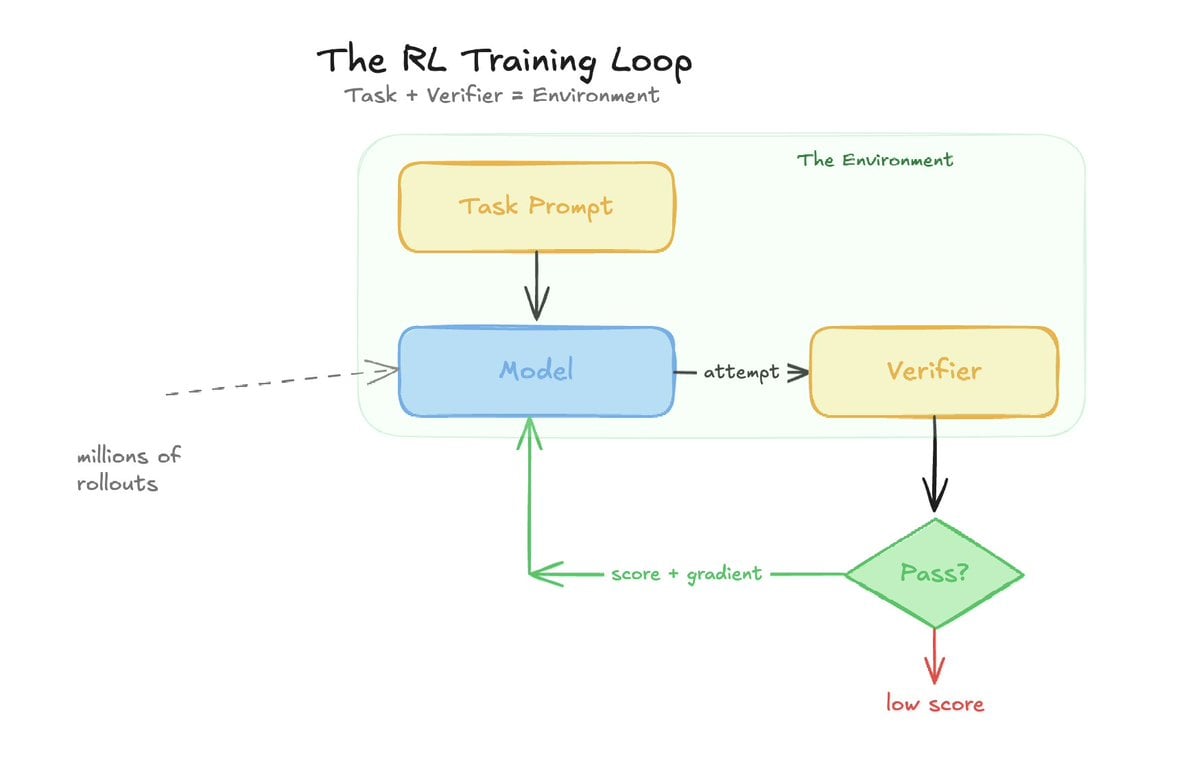
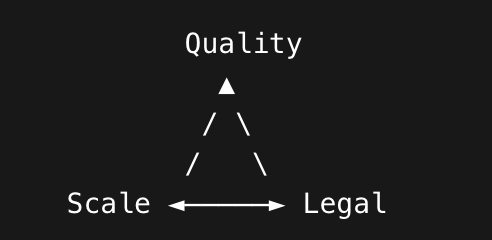
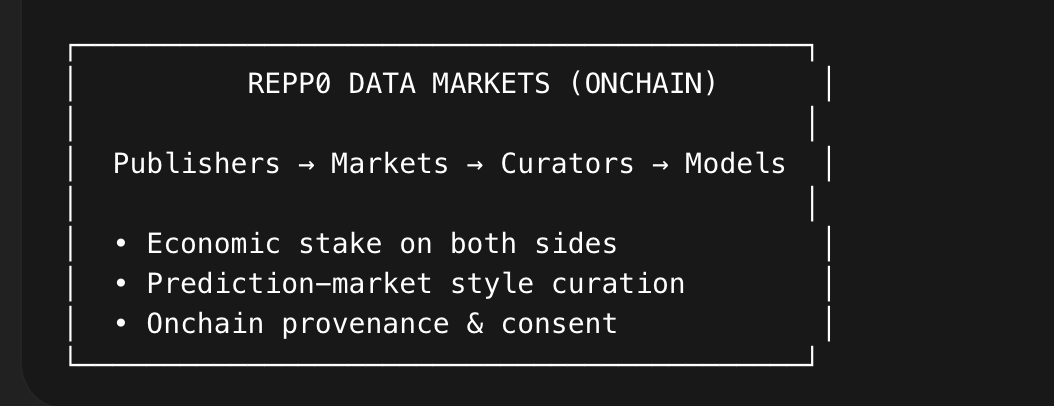
“Scale AI coordinates training data pipelines with contracts. Reppo coordinates them with markets, access controls, and on-chain incentives.”By putting stake behind both contribution and curation, Reppo is designed to address the AI training data trilemma.
Key concepts
Datanets are domain-specific prediction markets where data contributors publish work and put capital behind its quality. Each datanet defines its own rules: who can publish, what content qualifies, how fees are set, and how rewards flow. Pods are the atomic data units inside a datanet — a tweet, image, video, annotation, or any media the datanet accepts. Each pod is minted as an on-chain NFT on Base and earns REPPO emissions epoch by epoch based on how well it performs in curation voting. veREPPO is voting-escrow REPPO. Voters lock REPPO tokens for a chosen duration to receive veREPPO, which gives them curation authority. Larger locks and longer durations yield more voting power per token. Splitting tokens across multiple identities does not multiply power, making Sybil attacks economically ineffective. Epochs are 48-hour windows during which publishers submit pods, voters allocate veREPPO, and rewards accrue. Voting power decays linearly throughout each epoch — earlier votes carry more weight — and at epoch end the network calculates emissions. The Performance Pool distributes every third epoch.Participants
On-chain infrastructure
All on-chain activity runs on Base (chain ID8453). The contracts you interact with directly are:
Reppo is not an L1 or L2 network. It is a protocol layer built on Base.
Explore the docs
Why Reppo
The motivation behind Reppo and the data labor problems it sets out to fix.
How Reppo Works
The system-level flow: participants, publishing, curation, and emissions.
Datanets
Understand how domain-specific data markets work and how to create one.
Pods
Learn how to publish, mint, vote on, and claim emissions from pods.
Votes & Curation
Stake-assured human feedback, veREPPO mechanics, and epoch voting rules.
Orquestra
Run a swarm of agents that publish and vote on your behalf, and earn rewards.